
Jesus as the rejected cornerstone carries profound theological weight across the New Testament. Jesus applies Psalm 118:22 to himself as prophecy1, establishing a pattern that early Christian leaders would repeatedly invoke to interpret his death and vindication.
What the builders discarded as worthless becomes the most essential stone—literally the “head of the corner” placed where two rows of stones meet, absolutely indispensable to any structure2. This architectural metaphor captures the paradox of Jesus’ rejection and exaltation: though rejected and seemingly defeated by his own people, God would raise him from the dead and seat him at his right hand, vindicating him in a way that is marvelous to behold3.
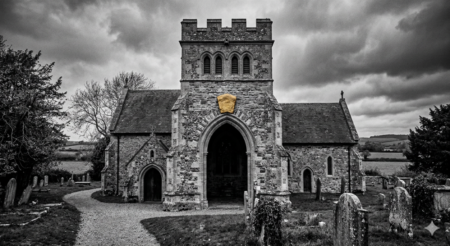
The image functions on multiple levels. The religious leaders—the “builders”—reject God’s final envoy, the Son himself, but God reverses this rejection, and Jesus triumphs over death to become the cornerstone of the church1. This church comprises both Jews and Gentiles, producing the fruit of God’s kingdom1. More broadly, Christ Jesus himself serves as the chief cornerstone upon which the apostles and prophets build (Eph 2:20), and no other foundation can be laid besides him (1 Cor 3:11).
However, the stone carries dual significance. Beyond representing Jesus’ supreme importance, the stone also embodies destructive power against those who reject it—whether someone falls upon it and is dashed to pieces or it falls upon them and crushes them, the result is fatal, making Jesus both the cornerstone of salvation and a stone of judgment for those who persist in unbelief2.
All three Synoptic Gospels record Jesus citing this psalm in response to the parable of the wicked tenants (Matt 21:42; Mark 12:10–11; Luke 20:17), while Peter later invokes the same passage when defending Jesus before the Sanhedrin (Acts 4:11).
1 Bitrus A. Sarma, Hermeneutics of Mission in Matthew: Israel and the Nations in the Interpretative Framework of Matthew’s Gospel (Carlisle, Cumbria: Langham Monographs, 2015), 139–141.
2 French L. Arrington, The Spirit-Anointed Jesus: A Study of the Gospel of Luke (Pathway Press, 2020), 331.
3 Bruce B. Barton, Matthew, Life Application Bible Commentary (Wheaton, IL: Tyndale House Publishers, 1996), 425.
Is it capstone or cornerstone?
This whole capstone/cornerstone thing can be quite confusing. Depending on the Bible translation(s) you read, you’ll see one or the other. Plus, depending on whether we’re talking Biblical or building stones – it could be in a different location. And of course, there’s the reality that it comes from a Hebrew word that is translated in different manners across different Bible translations and even versions from the same source.
Since I generally use the 1984 NIV, you’ll mostly read capstone here. But apparently that NIV version is in the minority. That doesn’t mean it’s wrong. It just means we have to put in more effort to learn.
Hebrew word rosh pinnah – “Insight
🧭 Why the confusion?
Because Psalm 118:22 uses a Hebrew word (rosh pinnah) that literally means:
“head of the corner”
That phrase can mean:
the first stone (cornerstone)
the top stone (capstone)
the most important stone (chief stone)
Different translations choose different architectural metaphors to express the same idea:
the stone that is rejected becomes the most important stone in the entire structure.
NIV 1984 chose capstone to emphasize completion.
Most modern translations choose cornerstone to emphasize foundation.
Both are theologically valid metaphors — they just highlight different aspects of Christ’s role.
And then here’s a bit more on the Biblical/architectural implications of the word.
Architectural vs. biblical metaphor – Insight
🧱 Two different “capstones” — architectural vs. biblical metaphor
- Architectural capstone (modern usage)
The stone at the top of an arch
Sometimes called a keystone
Locks the arch together
Often decorative
This is what the image generator made for the church at the top of the page.
This is the meaning most people today think of.
- Biblical “capstone” (NIV 1984 usage)
In Psalm 118:22 and the NT quotations, the Hebrew phrase is:
rosh pinnah — “head of the corner”
This can mean:
cornerstone (foundation stone)
capstone (top stone)
chief stone (most important stone)
NIV 1984 chose capstone to emphasize completion and supremacy, not literal placement.
So the biblical “capstone” is not necessarily:
the top of an arch
the decorative stone
or even the top of the building
It’s the most important stone, the one that defines or completes the structure.
I hope that all helps. If nothing else, remember that when referring to Jesus as the capstone/cornerstone/chief stone – or even the foundation as Paul wrote about – the metaphor is to show that Jesus is the most important stone, the one that defines or completes the structure.
The bottom line then, for Jesus as the Capstone (The Stone the Builders Rejected) – is that those who should have known, because they were aware of all the prophecies, rejected the very One they’d been waiting for, the Savior sent from God.
NOTE: don’t get mad at them for rejecting Jesus.
🔍 Reflective Insight – Why It Had to Happen
Jesus’ rejection wasn’t an accident or a failure in God’s plan. Scripture shows that the leaders’ rejection was part of the pattern God had already revealed — the stone dismissed by the builders becomes the most important stone of all. This theme is explored more fully in What Didn’t Happen Before Jesus Died on Good Friday, where the timing, resistance, and fulfillment all come together.
So, this was part of the prophecy about Jesus coming and not being recognized for who He was. It had to be that way. And God made sure it happened. No matter how much we might protest that we would’ve been different, that we would’ve recognized Jesus and could’ve saved Him from dying on the cross – pause to think about that a moment – that just could never have been allowed by God. Jesus’ death was an essential part of the plan. His death – for our life.
For a much deeper understanding of all that, please check out:
What Didn’t Happen Before Jesus Died on Good Friday?
Discover more from God versus religion
Subscribe to get the latest posts sent to your email.