Sleep
-
📖 Sleep means sleep, doesn’t it? Like – you go to sleep, you sleep for a while, and then you wake up. What else is there? Plenty. It means different things, not only in the Bible, but in ancient civilizations that didn’t believe in the God of the Bible. But in the Bible, it means different things to different people – and even then, it meant different things over time, even to the same people. Got it?
Maybe. Maybe not. A biblical definition of “sleep”, especially one that includes both the Old and New Testaments, really does depend on who, what, and when.
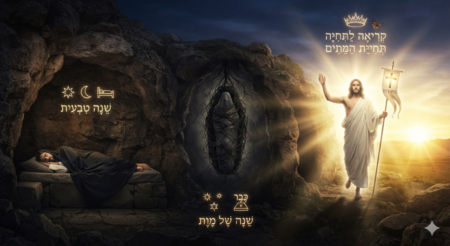
I guess a deeper explanation’s needed here. Even if you enlarge the image, this appears to be a complicated concept, but it really isn’t. I think we just have a way of making things hard today.
Here’s the Google Gemini AI description of what it gave me, based on my opening paragraph:
🤖♊ Visual Guide: The Three Stages of Biblical “Sleep”
To help navigate the imagery in the graphic above, here is a breakdown of the three distinct panels, moving from left to right, along with the meaning of the ancient inscriptions:
1. The Left Panel: Natural Sleep
- The Imagery: A figure resting peacefully on a bed under a crescent moon, depicting the everyday biological process.
- The Inscription: שֵׁנָה טִבְעִית (Shenah Tiv’it)
- The Meaning: Hebrew for “Natural Sleep.” This represents the literal definition we all know—going to sleep at night and waking up the next morning.
2. The Middle Panel: The Sleep of Death
- The Imagery: A wrapped burial shroud enclosed by deep earth roots, resembling a cocoon or chrysalis. This captures the ancient and Old Testament view of the grave as a temporary, dormant state of waiting.
- The Inscriptions:
- קֶבֶר (Kever) – Hebrew for “Grave” or “Tomb.”
- שֵׁנָה שֶׁל מָוֶת (Shenah Shel Mavet) – Hebrew for “Sleep of Death.”
3. The Right Panel: The Ultimate Awakening
ΕΓΕΙΡΩ (Egeirō on the flag) – The specific Greek verb used throughout the New Testament gospels. It literally means “to awaken,” “to rouse from sleep,” or “to raise up” from death, permanently tying the act of waking up to eternal life.
The Imagery: The broken tomb bursting into a golden sunrise, symbolizing the moment “waking up” was forever redefined. Above the crown, a butterfly emerges, mirroring the broken cocoon from the middle panel.
The Inscriptions:
קְרִיאָה לִתְחִיָּה (Kri’ah Litchiya) – Hebrew for “A Call to Revival” or “A Summons to Resurrection.”
תְּחִיַּת הַמֵּתִים (Tchiyat Hametim) – The traditional Hebrew theological term for “The Resurrection of the Dead.”
The thing is, when just viewing the left side of the image above – there’s no way to know if the person is alive and sleeping in the traditional sense – or if they’re dead, meaning no heartbeat. And then, if the person is dead, only God knows whether the resurrection will ultimately be to Heaven or not. And then, there’s the middle image – which is based on both Old Testament Hebrew beliefs and other ancient civilizations.
And so, we see the changes over time – and between different people.
I have an article to explain this in more depth – too long for a glossary entry. I’m writing it now – and will add the link as soon as it’s published.
Discover more from God versus religion
Subscribe to get the latest posts sent to your email.