
Providence (of God)
- Providence
-
- (often initial capital letter) the foreseeing care and guidance of God or nature over the creatures of the earth.
- (initial capital letter) God, especially when conceived as omnisciently directing the universe and the affairs of humankind with wise benevolence.
- a manifestation of divine care or direction. 1dictionary.com
What’s the difference between Providence and fate?
🤖✨
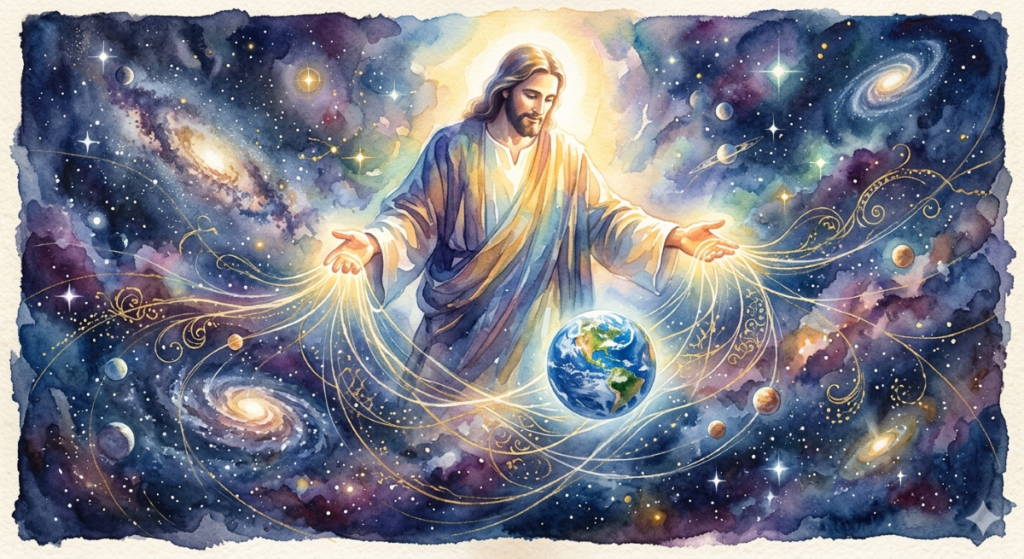
Fate envisions a world locked into an inexorable necessity with no genuine possibility for change, whereas providence affirms a world directed by a moral God who enables authentic freedom and genuine good.1 The distinction hinges on meaning and hope: providence invites action and offers victory over life’s circumstances, while fate demands resignation and acceptance of what has been decreed.1
Fate operates as an impersonal, irrational cosmic force that drains life of meaning and purpose, whereas providence is deeply personal and brings divine light to bear on human decision-making.1 In ancient thought, fate—personified as Moira—represented an unseen power ruling human destiny, one so absolute that even the gods could not defy it.2 Greek tragedy embodied this vision, with the tragic flaw itself being fate—a shadow darkening all human existence.1
Christianity fundamentally reframes this outlook. Rather than fate, the tragic flaw becomes sin, which is not something that happens to us necessarily but is freely chosen, though it leads to bondage—sin is inevitable but not necessary, becoming inevitable only through how we choose to live.1 Providence reveals that human destiny can be altered by divine intervention, carrying hope that those of faith can overcome life’s circumstances through divine empowering.1
Importantly, providence presents an alternative to determinism, indeterminism, and fatalism—life becomes meaningful and fruitful because God works within our decisions to bring about new creation, and the Spirit of God sets us free to shape our destiny.1 Providence does not mean being compelled by God to act in a particular way, but being liberated by God to act according to his will and purpose—it is moral direction in chaos, not divine ordination of whatever comes to pass.1
1 Donald G. Bloesch, The Last Things: Resurrection, Judgment, Glory (Downers Grove, IL: IVP Academic, 2004), 252–253.
2 Walter A. Elwell, in Evangelical Dictionary of Theology: Second Edition (Grand Rapids, MI: Baker Academic, 2001), 439.
Footnotes:
- 1
Discover more from God versus religion
Subscribe to get the latest posts sent to your email.